The Rise of the Robotic Reels
We have all stumbled across them while scrolling through our social feeds: a sleek, beautifully shot video or a high-end corporate showcase that instantly falls flat the second the voiceover kicks in. Instead of a natural, resonant voice guiding you through the story, you are greeted by an emotionless, synthetic algorithm reading off a script with uncanny, mechanical precision.
It is easy to see why this trend has taken hold. Artificial intelligence audio tools have advanced at a breathtaking pace over the past couple of years. The promise of generating instant, multi-language voiceovers at the click of a button is magnetic for time-strapped marketing teams trying to stretch their production budgets across five or six international markets.
From where we sit at Overseas Translations, coordinating voiceovers, DTP and localisation workflows every day, we are certainly not anti-technology. Speech synthesis has come a remarkably long way, and AI audio tools are fast becoming a permanent fixture in modern media production. However, there is a massive gulf between leveraging technology for internal efficiency and lazily dumping raw, unedited synthetic audio onto your brand’s public face. When you rely on cheap, off-the-shelf AI voices to represent your business, you build an instant barrier between your message and the very audience you are trying to convert.
The Psychology of Sound: Why “Robotic” Audio Kills Brand Trust
Human ears are exceptionally sophisticated filter systems. We do not simply process the literal words someone is speaking; our brains constantly analyse micro-pauses, breath control, subtle shifts in pitch and underlying emotional resonance. We are biologically hardcoded to spot insincerity. When an AI voice misplaces the stress on a key word or rushes through a clause without a natural breathing rhythm, it triggers an immediate “uncanny valley” response in the listener. Their attention instantly shifts away from what you are saying to focus entirely on how artificial it sounds.
When you take a campaign across international borders, this friction multiplies. Accent, cadence and vocal posture carry enormous cultural weight:
- The standard dialect trap: AI speech generators are typically trained on a handful of generic, standard audio models—such as General American English or Castilian Spanish. When deployed into nuanced regional markets, these synthetic voices sound sterile, distant and thoroughly out of touch with local consumers.
- Vocal authority across cultures: Vocal tone is not culturally neutral. A delivery style that feels warm, relaxed and friendly in one country can easily come across as clinical, dismissive or patronising in another. Synthetic voices lack the emotional agility required to adapt tone to local cultural expectations.
- The social media fatigue factor: Global audiences on platforms like Instagram, TikTok and LinkedIn have developed rapid AI fatigue. Hearing an overused, off-the-shelf synthetic voice on a product launch sends a damaging, unintended signal: “We didn’t care enough to invest in our own content, so why should you care enough to buy our product?”.

Behind The Scenes: The Technical Traps AI Audio Always Falls Into
When you pull back the curtain on media localisation, audio is not simply about reading words off a page—it is a precise engineering exercise. While an AI voice generator can read a clean, isolated script in a laboratory setting, real-world marketing assets and technical content present practical hurdles that trip up algorithms every single week.
Here are the recurring technical friction points we catch on our revision desks:
- The pronunciation disaster: Synthetic voice engines read text phonetically based on standard dictionary rules. They routinely mangle brand names, technical acronyms, localised SKU codes, product ranges and foreign loanwords. For example, a default AI voice reading a technical catalogue might pronounce the energy unit “kWh” literally as “kwh” (kuh-wuh) or treat “Nike” as a single-syllable word (“Nyk”), instantly destroying professional credibility. Unless an audio engineer spends hours manually hard-coding phonetic guides using the International Phonetic Alphabet (IPA), your sleek product launch risks mispronouncing your own flagship brand name or key specifications.
- Pacing and timing (the audio equivalent of DTP text expansion): Just as a paragraph of written English expands by 20% to 30% when translated into German or Spanish, spoken audio duration changes dramatically across languages. A professional native voice actor automatically adjusts their cadence, pausing naturally to hit specific video cues and visual cuts. Raw AI generators lack spatial and visual context—they will either race through a sentence like an auctioneer to fit a tight visual window (reading a complex phrase like “Model RX-5000 with 250 kW output” in a single, breathless burst) or keep talking long after the scene has cut away.
- Monotone storytelling: AI models struggle with contextual narrative shifts. They cannot feel excitement, irony, suspense or empathy. If a script shifts from detailing a frustrating customer problem to introducing a high-energy solution, a human voice actor shifts emotional gears instantly. An AI model delivers the dramatic solution with the exact same flat, neutral inflection it used to describe the problem.
Audio Engineering and Post-Production: IPA, SSML and Spectral Smoothing
When raw AI audio leaves the generator, it is rarely ready for public release. Bringing synthetic voice tracks up to broadcast standards requires technical post-production work that goes far beyond simple text-to-speech conversion:
- Phonetic hard-coding with IPA: To fix stubborn mispronunciations, engineers manually map complex scripts using the International Phonetic Alphabet (IPA), forcing the synthesiser to produce exact phonetic sounds rather than relying on its default dictionary guess.
- Granular control via SSML: Audio specialists mark up text using Speech Synthesis Markup Language (SSML). By embedding tags directly into the script, we explicitly define pause durations, adjust pitch curves, modify speaking rates for fast visual cuts and dictate syllable emphasis.
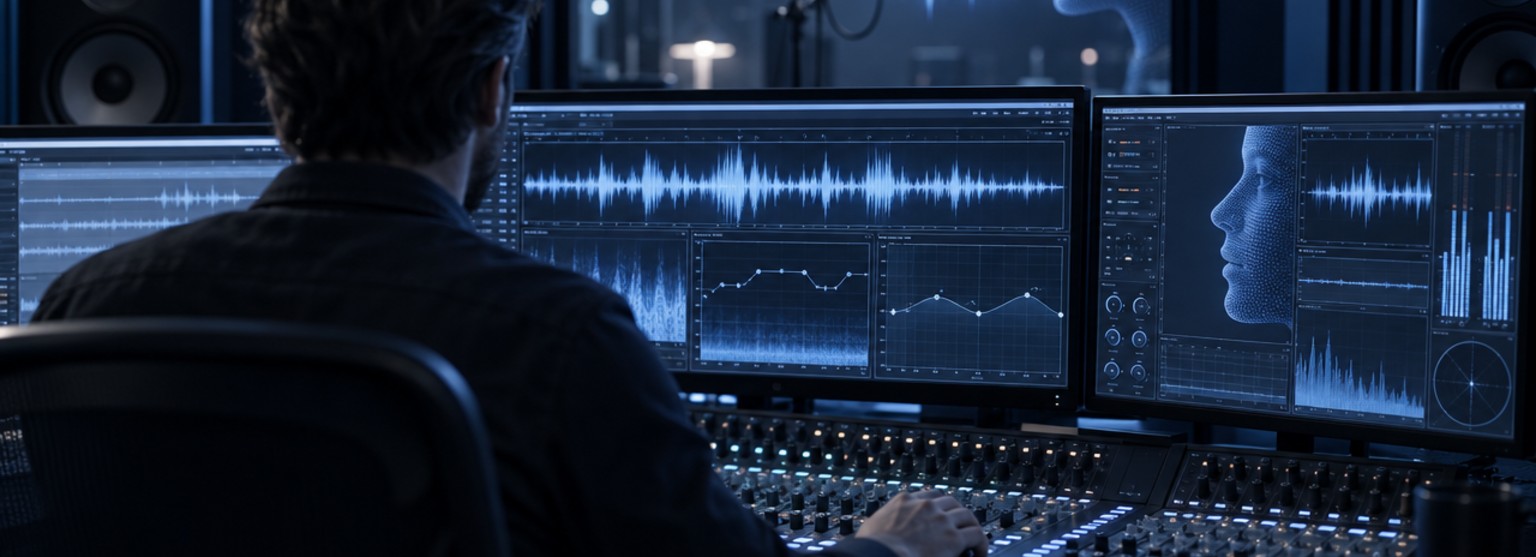
- Acoustic smoothing and environment matching: Raw synthetic audio is produced in a “dead” digital space that lacks natural room acoustics and dynamic range. Audio engineers apply subtle equalisation (EQ), dynamic compression and ambient room tone to blend the voice track naturally into the video’s soundscape.
The Industry Reality: A Realistic Framework for Your Brand
So, where does that leave global marketing teams? Should you ban synthetic audio altogether? Absolutely not. At Overseas Translations, we advocate for a pragmatic, balanced approach that pairs the right audio technology with the actual business value, channel and emotional stakes of your content.
Here is the strategic framework we use to guide our clients through their multilingual audio projects:
| Tier | Best used for | Workflow and approach |
|---|---|---|
| Pure AI audio | Internal training modules, high-volume IT documentation, basic software walkthroughs. | Fast and functional. The source script is reviewed by linguists, processed through AI speech generation, and published for internal or low-stakes audiences |
The hybrid model (AI + human review) | E-learning platforms, multilingual product demos, mid-tier social content, customer support videos. | The sweet spot. Linguists adapt the script specifically for natural speech flow, and an audio specialist fine-tunes the synthetic voice’s pitch, speed, pauses and pronunciation rules. |
| 100% native voice actors | TV and radio commercials, hero brand campaigns, luxury marketing, high-stakes emotional storytelling. | Zero compromise. Professional native voice talent recorded in a studio setting, directed by experienced audio producers to capture genuine emotional resonance and local authenticity. |
The Hybrid Blueprint: How to Execute AI Audio Without Sacrificing Quality
For mid-tier assets such as e-learning modules, product walkthroughs and localised social content, the hybrid model (AI + human review) offers the optimal balance between speed and quality. However, achieving high-grade results requires a structured workflow:
- Source script adaptation: Native linguists rewrite written source text specifically for oral delivery, replacing clunky phrasing with natural speech transitions.
- Terminology and phonetic mapping: Before generating audio, a master phonetic key is compiled. Every product SKU, brand name and technical term is assigned an explicit IPA string or audio reference clip.
- SSML markup and initial generation: The adapted script is tagged with SSML parameters to establish natural pauses, cadence and volume modulation across different video sections.
- Native audio fine-tuning: A native-speaking audio specialist reviews the generated stems alongside a linguist to manually adjust pitch anomalies, correct subtle inflection errors and ensure accent authenticity.
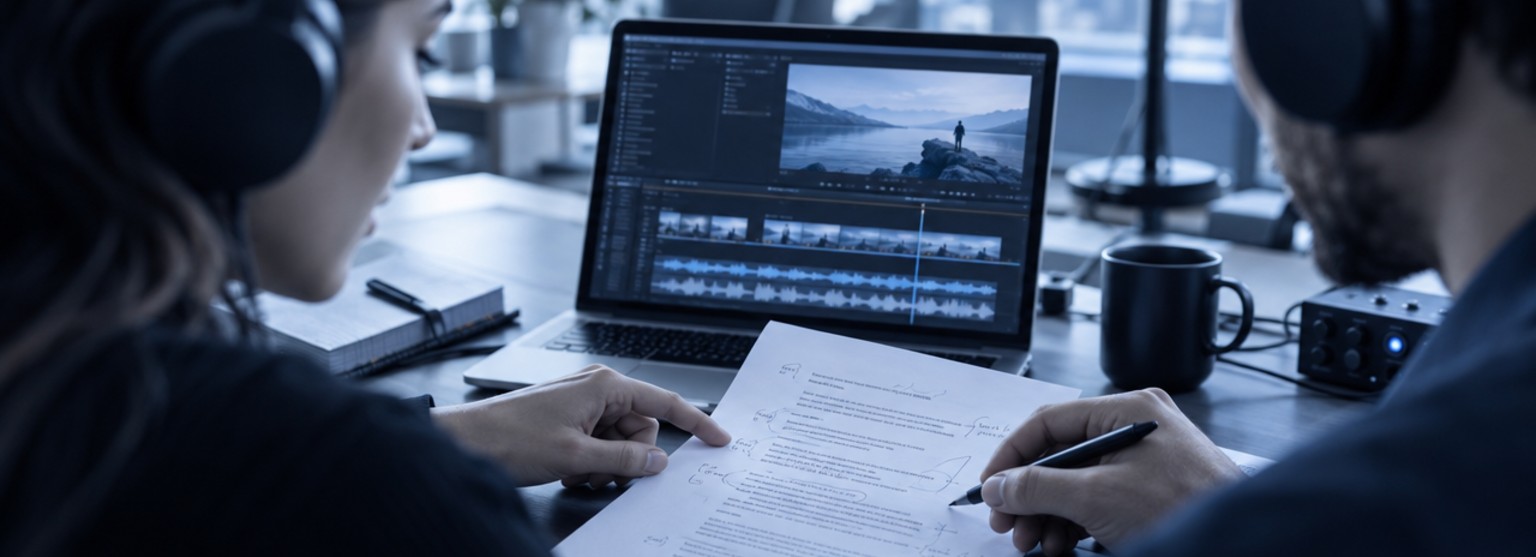
- Video synchronisation and visual QC: Finalised audio stems are aligned with localised video edits, ensuring voiceover timing matches visual cuts, text callouts and on-screen actions without awkward rushing or lagging.
The Legal and Ethical Minefield of Synthetic Audio
Beyond creative and technical challenges, synthetic audio introduces complex legal and licensing questions that global brand managers must navigate carefully:
- Voice actor rights and synthetic cloning: Training AI models on human voice recordings without explicit, contractually binding consent has led to significant legal pushback. Using synthetic voice models built on unauthorised voice data exposes brands to potential copyright infringement, publicity right violations and reputational damage.
- Regulatory transparency (The EU AI Act): Modern regulatory frameworks, including the EU AI Act, are tightening transparency requirements for synthetic media. In many jurisdictions, commercial content featuring artificial or synthetic audio must be clearly disclosed or labelled to prevent misleading consumers.
- Commercial licensing and voice asset ownership: Synthetic voice platforms often restrict commercial usage rights based on subscription tiers. Furthermore, if a platform relies on third-party voice models that are updated or removed, a brand risks losing access to its core audio identity mid-campaign.
Audio Accessibility: Subtitles, SDH and Descriptive Narration
True global reach means ensuring your media content is accessible to every user, including people who are deaf, hard of hearing or visually impaired:
- Synchronising Voiceovers with Subtitles for the Deaf and Hard of Hearing (SDH): Viewers who read subtitles while listening to audio—whether due to hearing impairments, processing preferences or noisy environments—notice immediate discrepancies between written text and spoken words. Ensuring tight alignment between spoken audio and caption tracks eliminates cognitive friction.
- Synthetic Audio for Audio Description (AD): While human voice actors remain essential for primary brand narration, synthetic voices offer a highly effective, cost-efficient solution for secondary Audio Description (AD) tracks, providing concise spoken descriptions of visual actions and scene changes during natural pauses in dialogue.
A Client’s Checklist for Multilingual Audio
If you are planning your next video campaign or e-learning launch, here is a practical checklist to ensure your audio sounds polished, natural and culturally appropriate across every market:
- Write for the ear, not the eye: Spoken scripts require shorter sentences, natural pauses and simpler phrasing than printed catalogues or website copy. Always have a native linguist adapt your written text into a true, performable voiceover script before recording or generating audio.
- Build a pronunciation key early: Compile a comprehensive list of brand names, product SKUs, acronyms and technical terms. Providing phonetic guides (using IPA) or audio reference files ensures that neither human voice actors nor AI engines mispronounce your core terminology.
- Pace for language expansion: Remember that spoken languages take up vastly different amounts of time. Build natural visual buffers into your initial video edit to allow translated audio the space to breathe without feeling rushed or cut off.
- Audit local cultural preferences: Voice expectations vary wildly by region. A casual, fast-paced delivery that works brilliantly in North America can easily come across as unprofessional or abrasive in Germany or Japan. Research and test what tone your target audience actually respects.
- Never publish raw, unedited synthetic audio: If you opt for AI voice technology to save time or budget, always ensure a native audio engineer reviews, adjusts and fine-tunes the output before it goes live.
Balancing Tech Efficiency with Brand Authenticity
Artificial intelligence is reshaping media production at an extraordinary pace, and voiceover tools will only continue to improve. However, technology must serve your overarching brand strategy—never dictate it.
A synthetic voice might save a few hours on a routine social media edit, but if it sounds robotic, detached or unnatural, the true cost is paid in lost customer trust. By pairing smart automation for high-volume, low-stakes content with human expertise and professional native voice talent for your high-impact messaging, you secure the best of both worlds: speed and scale without compromising brand authenticity.